How Strength Training Quietly Transforms Your Health Metrics
You don’t need extreme workouts to see real health changes—just consistent strength training. I started lifting weights simply to feel stronger, but what surprised me were the silent wins: better blood pressure, improved energy, and a healthier body composition. It wasn’t about bulking up—it was about upgrading my internal metrics. If you think strength training is only for athletes, think again. This is about long-term vitality, not short-term gains. These subtle shifts often go unnoticed at first, but over time, they add up to something powerful: a body that functions better, recovers faster, and resists illness more effectively. And the best part? You don’t need hours in the gym or expensive equipment to experience them.
The Hidden Power of Strength Training (Beyond Muscles)
Most people associate strength training with visible results—toned arms, defined legs, or a firmer core. While those changes can happen, they only tell part of the story. The deeper, often invisible benefits are what make resistance exercise one of the most impactful habits for long-term health. Unlike high-intensity cardio or endurance training, which primarily challenge the cardiovascular system, strength training works at the cellular and metabolic level to improve how your body regulates energy, manages stress, and maintains internal balance.
One of the most significant yet underappreciated effects of regular strength training is its influence on metabolic rate. Muscle tissue is metabolically active, meaning it burns more calories at rest than fat tissue. When you increase muscle mass—even slightly—your body’s baseline energy expenditure rises. This doesn’t mean you’ll suddenly lose weight without changing anything else, but it does create a more favorable environment for fat loss and weight maintenance over time. For women over 30, especially those navigating hormonal shifts during perimenopause and menopause, this metabolic boost becomes increasingly important as natural calorie needs decline.
Beyond metabolism, strength training plays a crucial role in blood sugar regulation. During resistance exercise, muscles pull glucose from the bloodstream to use as fuel, improving insulin sensitivity. This means your cells respond more efficiently to insulin, reducing the risk of insulin resistance and type 2 diabetes. Studies have shown that just two strength training sessions per week can lead to measurable improvements in fasting blood glucose and HbA1c levels, even in individuals who don’t lose weight. These changes happen independently of diet, although combining strength training with balanced nutrition amplifies the benefits.
Cardiovascular health also benefits from strength training, though this is often overlooked. While aerobic exercise strengthens the heart muscle directly, resistance training improves vascular function by lowering blood pressure and reducing arterial stiffness. It also contributes to healthier lipid profiles—raising HDL (the “good” cholesterol) and lowering triglycerides. Contrary to outdated beliefs, strength training does not harm the heart when performed with proper form and appropriate intensity. In fact, it supports heart health by reducing systemic inflammation, a key driver of atherosclerosis and other cardiovascular conditions.
Why Health Metrics Matter More Than the Mirror
Many women judge their fitness progress by how their clothes fit or what the scale says. While these are understandable reference points, they offer an incomplete picture of health. A person can look the same in the mirror yet experience significant internal improvements—lower blood pressure, reduced abdominal fat, better energy levels—that aren’t immediately visible. Conversely, someone might lose weight but still carry excess visceral fat, which surrounds internal organs and increases the risk of chronic disease.
This is why tracking objective health metrics is so valuable. Blood pressure, for example, is one of the most important indicators of cardiovascular health. High blood pressure often has no symptoms, earning it the nickname “the silent killer.” Yet it significantly increases the risk of stroke, heart attack, and kidney disease. Regular strength training has been shown to reduce both systolic and diastolic blood pressure, with some studies reporting drops of 3–5 mmHg—comparable to the effects of certain medications.
Body fat percentage and waist circumference are two other critical metrics. While the scale might not budge, a decrease in waist size indicates a reduction in visceral fat, which is strongly linked to inflammation and metabolic dysfunction. A waist measurement of less than 35 inches for women is generally considered a healthy target, though individual goals may vary. Tracking this number monthly can reveal progress even when weight stays the same.
Resting heart rate is another silent indicator of fitness. As your heart becomes more efficient through regular physical activity—including strength training—it doesn’t have to work as hard to pump blood. A lower resting heart rate (typically below 70 beats per minute for adults) reflects improved cardiovascular fitness and is associated with a longer lifespan. Women who incorporate strength training into their routines often notice this change within a few months, especially when combined with consistent movement throughout the day.
My Simple Routine That Actually Worked
I didn’t start with barbells or a gym membership. My journey began with a yoga mat, a pair of 5-pound dumbbells, and a resistance band I found in the back of my closet. The routine I built was simple, repeatable, and designed to fit into a busy schedule. I committed to just 25 minutes, two to three times a week, focusing on full-body movements that engaged major muscle groups without requiring complex equipment or perfect technique.
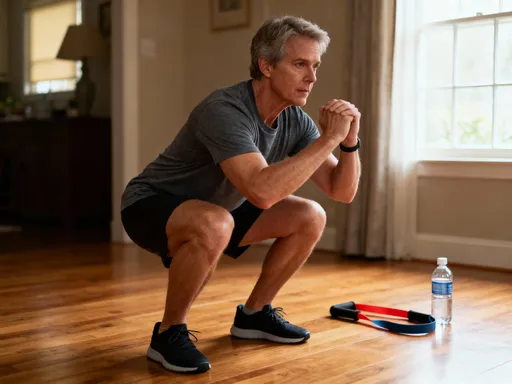
Each session followed the same basic structure: a 3-minute warm-up of marching in place and arm circles, followed by three rounds of five exercises. I started with bodyweight squats—standing with feet shoulder-width apart, lowering into a seated position, then standing back up. This movement targets the glutes, quads, and hamstrings while also engaging the core. I did 10 repetitions per round, gradually increasing to 15 as I gained strength.
Next came modified push-ups. Instead of doing them on the floor, I performed them against the kitchen counter to reduce strain on my wrists and shoulders. This variation still worked the chest, shoulders, and triceps effectively. I aimed for 8–10 reps, focusing on keeping my body in a straight line and breathing steadily. Over time, I progressed to doing them on the floor, but there was no rush—consistency mattered more than speed.
The third exercise was a resistance band row. I anchored the band around a sturdy door handle, sat back into a slight squat, and pulled the band toward my ribcage, squeezing my shoulder blades together. This movement strengthened my upper back and helped counteract the forward hunch many of us develop from sitting at desks or looking at phones. I completed 12 repetitions per set.
For lower body stability, I added standing lunges—stepping forward with one leg, lowering until both knees were at 90 degrees, then pushing back to start. These improved my balance and coordination while building strength in my legs and hips. I did 8 per leg per round. Finally, I finished with a plank hold, starting with 20 seconds and working up to 45 seconds over several weeks. This core exercise supported posture and reduced lower back discomfort.
The key wasn’t intensity—it was consistency. I scheduled my workouts for the same days each week, usually after my morning coffee or during a child’s nap time. I didn’t push myself to exhaustion; I focused on form, control, and showing up. Within two months, I noticed I could carry groceries more easily, climb stairs without getting winded, and stand for longer periods without fatigue.
How I Tracked My Progress (And You Can Too)
At first, I wasn’t sure if anything was really changing. I didn’t look dramatically different, and the scale barely moved. But I decided to track a few simple metrics at home to see if there were underlying improvements. I started with a basic digital blood pressure monitor I purchased online. Every Monday morning, after sitting quietly for five minutes, I took two readings and recorded the average. After six weeks, I saw my systolic number drop from 132 to 126—a small but meaningful shift.
I also used a tape measure to track my waist, hips, and upper arms once a month. I measured at the same time of day, wearing similar clothing, to keep conditions consistent. Over three months, my waist decreased by one inch, even though my weight stayed within a two-pound range. This told me I was losing fat and gaining muscle—a much healthier transformation than weight loss alone.
To assess body composition, I invested in a basic scale with bioelectrical impedance analysis. While not as accurate as clinical methods, it gave me a general trend over time. My body fat percentage gradually declined from 38% to 35%, and my estimated muscle mass increased slightly. I didn’t obsess over the numbers; instead, I looked for patterns across weeks and months.
I also kept a simple energy log in my notebook. Each evening, I rated my daily energy on a scale of 1 to 5 and noted any fatigue, mood changes, or sleep quality. Within a month, I noticed more 4s and 5s, fewer afternoon slumps, and less reliance on caffeine. These subjective improvements were just as important as the objective data.
The lesson here is that progress doesn’t always announce itself loudly. It shows up in quieter ways: easier movement, steadier moods, better sleep, and improved lab values. By tracking these metrics consistently, I stayed motivated even when the mirror didn’t reflect change. Anyone can do the same with minimal tools and a little patience.
The Science Behind Strength and Metabolic Health
Muscle is far more than a tool for movement—it functions as a vital metabolic organ. Each time you perform resistance exercises, your muscles absorb glucose from the bloodstream to fuel contraction. This process doesn’t stop when the workout ends. For up to 72 hours after strength training, muscles remain more sensitive to insulin, continuing to take in glucose even at rest. This post-exercise effect is known as excess post-exercise oxygen consumption (EPOC), and it contributes to better blood sugar control throughout the day.
Over time, regular strength training leads to structural changes in muscle tissue. Mitochondria—the energy-producing structures within cells—become more numerous and efficient. Capillaries increase in density, improving oxygen delivery and waste removal. These adaptations enhance overall metabolic efficiency, making the body better at converting food into usable energy rather than storing it as fat.
Another key benefit is the reduction of visceral fat. Unlike subcutaneous fat, which lies just beneath the skin, visceral fat accumulates around internal organs and releases inflammatory chemicals that disrupt hormonal balance and impair insulin signaling. Strength training has been shown to specifically target this deep abdominal fat, even in the absence of significant weight loss. This is particularly important for women in midlife, as hormonal changes can shift fat storage toward the abdomen.
Lipid profiles also improve with consistent resistance training. Research indicates that strength training can raise HDL cholesterol, lower triglycerides, and reduce small, dense LDL particles—the most dangerous form of “bad” cholesterol. These changes lower the risk of plaque buildup in arteries and support long-term cardiovascular health.
Additionally, strength training reduces systemic inflammation. Chronic, low-grade inflammation is linked to nearly every major age-related disease, from arthritis to Alzheimer’s. By lowering inflammatory markers like C-reactive protein (CRP), strength training helps create a healthier internal environment. These benefits are not reserved for elite athletes or young adults—they are accessible to anyone willing to pick up a dumbbell or resistance band and begin.
Common Myths That Keep People Away
Despite its proven benefits, many women avoid strength training due to persistent myths. One of the most common is the fear of “getting too bulky.” This concern is largely unfounded. Women have significantly lower levels of testosterone than men, making it extremely difficult to build large, bulky muscles through moderate strength training. Most women who lift weights develop a more toned, defined appearance—not a bodybuilder’s physique.
Another myth is that strength training is dangerous or hard on the joints. In reality, when performed with proper form and gradual progression, resistance exercise strengthens connective tissues, improves joint stability, and reduces the risk of injury. It can even alleviate symptoms of osteoarthritis by supporting the muscles around affected joints. The key is starting with manageable weights and focusing on technique rather than lifting heavy too soon.
Some believe that strength training requires a gym, special knowledge, or expensive equipment. While gyms offer resources, they are not necessary. Bodyweight exercises, resistance bands, and light dumbbells can provide a highly effective workout at home. Many free, reputable online videos and apps offer guided routines suitable for beginners.
Finally, there’s the misconception that strength training must be intense to be effective. This is not true. Consistency and proper movement patterns matter far more than how hard you push yourself in a single session. Even light to moderate resistance training, performed regularly, delivers measurable health benefits. The goal is not to exhaust yourself, but to challenge your muscles in a sustainable way.
Building a Habit That Lasts—Not a Quick Fix
Motivation fades, but habits endure. The most successful strength training journeys are built not on enthusiasm, but on routine. I found that linking my workouts to an existing habit—like drinking my morning coffee—made them easier to stick with. This technique, known as habit stacking, anchors a new behavior to something already ingrained in your day.
I also set micro-goals instead of aiming for dramatic transformations. My first goal was simply to complete three workouts in the first month. The next was to increase my plank time by 10 seconds. These small wins built confidence and reinforced the behavior. I celebrated non-scale victories, like carrying laundry up the stairs without stopping or feeling more stable when walking on uneven ground.
Another strategy was to keep my equipment visible. I left my resistance band on the kitchen table and my dumbbells by the living room chair. Seeing them reminded me of my commitment and reduced the friction of getting started. On days when I didn’t feel like working out, I gave myself permission to do just five minutes. Often, that small start was enough to carry me through the full session.
Lastly, I reframed strength training not as a chore, but as an act of self-care. Instead of thinking, “I have to work out,” I told myself, “I get to strengthen my body for the years ahead.” This mindset shift transformed it from a duty into a privilege—one that supported my ability to play with grandchildren, travel comfortably, and live independently as I aged.
Strength training isn’t about becoming a bodybuilder—it’s about building resilience from the inside out. By focusing on simple, repeatable movements, anyone can influence critical health metrics that matter most. The real reward isn’t how you look, but how you feel day after day. Start small, stay consistent, and let your body’s quiet improvements speak volumes.